Wednesday, January 25, 2017

Tennis Elbow & Physical Therapy

What is tennis elbow/lateral epicondylitis?


                      It is the most common overuse syndrome in elbow. In this injury the extensor muscles are involved and the common muscle involved is the extensor carpi radialis brevis. Tennis elbow affects people in other occupations like computer professionals, painters,weavers etc.. and it often seems that both the males and females are equally affected.


Symptoms of Tennis Elbow.


You may feel pain in the arm and tenderness in the elbow and the pain is getting worse when you try to lift an object,giving shake hands or grip an object. You may also find that you have a weak grip and stiff elbow. If your symptoms doesn't subside with in two weeks see your physiotherapist or G.P for advice. 


Diagnosis:

Cozen's Test:


It is one of the test to evaluate for tennis elbow. The test is positive  if it produce pain in the lateral side of the elbow.


Physiotherapy Management.
                    As per physiotherapy protocol there are several modalities for treatment of tennis elbow, includes, kinesio taping, electrotherapy, neural mobilization, muscle stretches, massage and strengthening, its aim is to reduce pain and improve function. 

In acute cases first  48 hours follows the P.R.I.C.E principle.(protection,rest,ice,compression and elevation).


Thursday, January 19, 2017

Cervical Spondylosis & Physiotherapy Management

What is Cervical Spondylosis?


Cervical Spondylosis or Cervical Osteoarthritis is a degenerative disorder of the cervical spine. It often seems in the middle and older ages due to the age related changes in the interverbral discs in the cervical region.


Owing to the degeneration of cervical region osteophytes are formed on the vertebrae. As a result of the narrowing of the spinal canal, gradually the spinal stenosis may develops.The main symptoms of the cervical spondylosis are neck pain and stiffness.In some cases pain radiates from the neck to the arms with a widespread called as cervical rhizopathy or cervical brachialgia. Some times this compression may lead to the muscle weakness, sensory disturbance and in the progressive stage there may be interference with the blood supply to the spinal cord.There are some risk factors for the sponsylosis like, extra strain on the neck, and positioning  the neck in uncomfortable position for long time.
An X-ray is the simplest form to diagnosis the spondylosis and the M.R.I shows the effects on soft tissues. 


Physiotherapy Management for Cervical Spondylosis.

                                       
                                      In the severe cases soft collar is recommend to cease the condition to getting worse. This immobilization helps to reduce the nerve irritation and reduce symptoms. 


Cervical Traction:

                             Cervical traction helps to increase the space between the joints and relieve the pressure on the disc and nerve roots. Traction can be done either   continuously or intermittently, alternating between shorts periods of pulling and time. 

In this traction pull is determined by patient comfort and the 10% of the body weight is the ideal weight for the traction to start, it is important that the traction weight don't exceeds more than 20kgs. This is also contraindicated in some cases like the patients having T.M.J problems, claustrophobia,spinal infections,tumors,arthritis, osteoporosis, and hyper mobility cases also.


Trans cutaneous Electric nerve Stimulation (T.E.N.S)

                   
                                     T.E.N.S is using to alleviate the pain in the case of spondylosis. It is a noninvasive way to block the signals from the nerve to spinal cord and brain.

Moreover this, it improves the blood circulation and reduce the spasm and edema.In this treatment the electrodes are placed on the pain area or the nerve area by the physiotherapist and the intensity will slowly increase to the limit that you can override the pain signals.The tens is contraindicated in cases of dementia, pacemakers, other cognitive cases.

Soft Tissue Mobilization:


In this type of mobilization patient is in sitting position and it consist of upper thoraxic  and cervical  spine areas.


Manual pressure and traction for the upper cervical areas

Deep pressure to the motor  point of the upper trapezius musculature


HVLA thrust manipulation to the cervical or thoraxic segments


In this patient clasped his opposite shoulder with both hands and the therapist do it very carefully. 

Wednesday, January 11, 2017

School Bags without back pain.

In the modern world the back pain in children associated with certain variables like weekly frequency of physical activity,time spend for watching t.v, sitting posture in classrooms and  in study rooms, the way of carrying backpacks.

                             Unlike in the past, parents are more concern about the children studies and they don't have enough time to take care on their children's health.  As a result of this children carry inappropriate schoolbags in a wrong way also, this leads to poor posture and back ache. Most of the parents will take care this problem when their child gets back pain and these parents needs advice from doctors to give proper care. In my perception parents can use their commonsense to reduce the chance of their child to get backache owing to the backpacks.


What is happening to the children's back when they are carrying overload on their back?


                         A heavy weight back pack can distorted the normal spinal curvature  and cause muscle strains, irritation to the spinal joints and rib cages also.

Gradually, this leads to a stooping posture ,reducing balancing and making it easier to fall.This type of muscle imbalance and back aches speeds the development of deformities that cant be corrected later in life.


Backpacks without Back pain-  Tips to Parents and teachers:


I recommended the safe school bag weight is 10% of the body weight  and encourage students to repack their back-pack at each night so they carry only what they needed. School bag should have two wide adjustable shoulder straps and it has adjustable padded waist and shoulder straps. We take care that the bag is not longer than the child's back and ensure that the child wear it on the middle of the back.

More over, we ensure that the child wear the two straps at a time to spread the weight evenly on the body and adjust the straps that the bag fit closely to the body.Wheeled backpacks are also advisable because they can pulled rather than carried.We should check that the child don't tote unnecessary items like laptop, video games etc. to add extra weight to the bag.

       Advice the child to don't lean forward while walking, if it is necessary that means the back pack is overloaded and we should suddenly reduce the weight. Advice your child to don't carry back pack when you don't have and train them to clean at least once in a week.

As physiotherapist we often assess and treat children and adults with back pain owing to the incorrect use of back pack. Unfortunately the back pack lost its true meaning because now a days we can see that people are wearing on one shoulder and others on one hand.
Obviously it's the peak time to conduct an awareness program in school levels and among in the public also. 

In addition to this posture in the classrooms also have a major role in this. While sitting in the classroom we ensure that the child sits in the chair with straight back.


We should encourage them to stand up and relax in between the long hours classes.

Monday, January 9, 2017

Exercises after Delivery.

Unlike in the past people are willing to do the post natal exercises because they are aware about the complications. These exercises helps to reduces high B.P and helps to control the cholesterol level. It also helps to maintain the body weight and psychological status. Moreover, it helps to improve the body posture and cease the back pain.

The post natal exercise can starts from 24 hrs following a normal delivery. In the case of cesarean you should not start until advice is sought from the doctor.


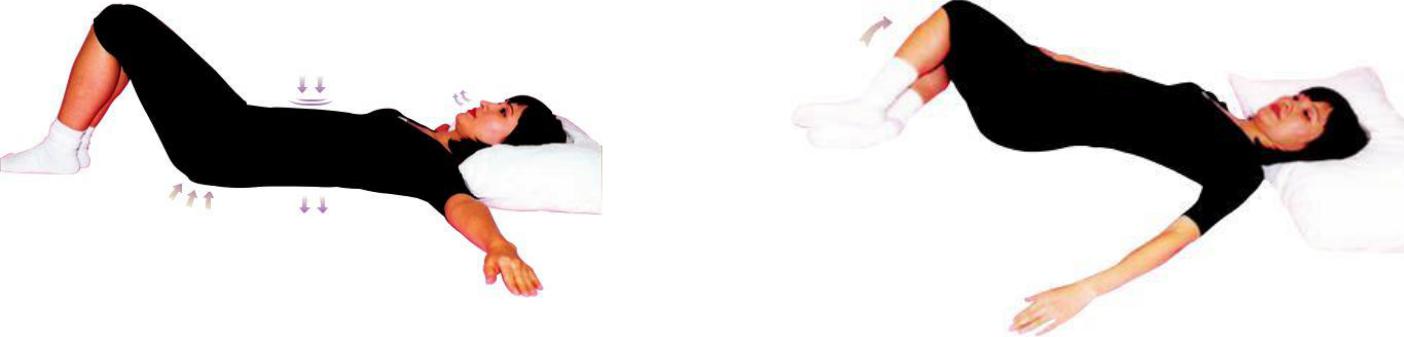
 Pelvic Tilting Exercises can start from the first day.

While performing the patient should lie on a firm surface and a pillow under the head. Pull into your tummy and press the lower part of back down. The patient should hold it for several seconds and repeat it.

Foot and ankle Exercises:


This exercises will helps to reduce your swollen ankles, improving blood circulation and prevents from deep vein thrombosis.
The patient should bend and stretch both ankles up and down for minimum 20 seconds and circle each ankle in one direction at 10 times.

Deep Breathing Exercises:


The patient should lie on supine position and the knees in flexion, the head is supported by a pillow.

Take a deep breath through the nose and exhale the air through mouth slowly and repeat it 5 times. This exercise should be done frequently.


Getting out of Bed:


whenever the patient gets up from bed, at first the patient should turn  to one side by bending knees .
The shoulders and the hips are in line  and slowly slide the feet outside the bed and push by himself.

Back and Abdominal Exercises:

1.

While performing this exercises the patient should be in a supine lying position and bend both knees together.

The patient should try to tighten the abdomen and flatten the low back against the bed, then bring both knees to right side . After that return to the starting position and take rest and repeat but to the left.


2.
       In the supine position  with knees flexed tighten the muscles of hips, upper and lower back , lift
the hips to straighten the low back, hold it for several seconds and lower it slowly.

3.
   In this exercises the patients both knees and hands are on the floor.
The patient should tries to tighten the abdominal muscles and round the back, flatten the back slowly.

4.

The patient should be in a supine position and the knees in flexed, keeping the foot together.
Tighten the abdominal and press the pelvis downwards  to flatten the lower back against the bed. Lift the head and shoulders just off the bed and try to touch both knees with hands and hold for a while and lower slowly.

5.

In this exercise the position is same as as in exercise 4.
Lift the head and shoulders to make the right shoulder point towards the left knee and try to touch the left knee with both hands, hold for several seconds and lower slowly, repeat to the right.

Exercises after cesarean:

Avoid heavy activities in the first five weeks and slowly build up as comfortable. If u feel any body pain take rest. Usually it will take 6 to 12 weeks to heal.

Day 1.
                 Patient can do deep breathing exercises ankle and leg movements. she can do the pelvic floor exercises also. While coughing protect the incision by bending knees and support lower abdomen. To get out of bed turn to one side with knee and knee hips flexed and slowly out the feet outside the bed and push up with the hands to get up.

Day 3-5
              Start abdominal exercises and always aim to strengthen the  pelvic floor muscles.


A short walk with 10 minutes on flat ground helps to improve fitness and then slowly increase the distance as comfortable.

Wednesday, December 28, 2016

Meniscal Tear Rehabilitation.

What is meniscus?

 The meniscus act as a cushion between the femur and tibia bones.
There are two menisci in each knee joint.Medial menisci are "c" in shape and the lateral menisci are circular in shape.Lateral menisci bears more weight compare to the medial menisci.

While doing the rehabilitation physiotherapist should take care of some general things.


The physiotherapist should assess the gait pattern regularly to avoid the compensatory gait. After surgery the knee should be placed in a hinged brace with knee in full extension for four weeks. As per the surgeons advice the weight bearing can give. Avoid lateral and twisting movements in the knee for twelve weeks. Surgical wounds and associated tissues should be mobilized manually.

Week- 1

1.Apply ice an elevate the limb in every two hours for 15-20 minutes.
2.Straight leg raising exercises can be given in lying, siting and standing.
3.Ankle pumps, quadriceps, gluteal sets can be given.
4. C.P.M, well leg static cycling and allow the knee to hang in pain free range with light stretch.

Goals:

 Decrease the pain and edema. With in one week the patient should meet a range of  0 to 70 degree.
Crutches can be used for gait and the knee should be in a hinge brace and locked in extension.Around 50% of the weight bearing can be given.


Weeks-2 to 4

1. Continue the same for pain and edema, and continue the previous exercises.
2. Aerobic exercises -unilateral cycling, single leg row machine and Schwinn air dyne with uninvloved leg and arms only.

Goals:

In addition to the 1st week goals the passive range of motion should be in 0-90 degree.
The gait and the walking aid support are same.

Weeks-4 to 6

1.As per the surgeons advice the knee brace can be remove.
2.Continue the same exercise and  incorporate functional exercises like partial squats, calf raises.
3. Treadmill with minimal speed and the static cycle with minimal resistance.

Goals:

  
Wean off crutch and brace and passive range of motion 0 to 120 degrees.

Week- 6 to 8

1. Continue the same for pain, edema and R.O.M and increase the intensity of exercises.

Goals:

Passive range of motion 0 to 135 degree and tolerate squats up to 90 degree.
Gait no limp.

Weeks- 8 to 12

1.Continue the same as above and add lateral training exercises like side step ups and lateral stepping.

Goals.


Full range of motion and initiate lateral training with no resistance.

Weeks- 12 to 16

1. Initiate return to running program 
2.Increase the intensity of strength 

Goals:


Full range of motion and running normally in treadmill.

Thursday, December 22, 2016

What is 1 2 3 4 5 6 abs pack? You can do it in your home also with out any machine.


What are 1 2 3 4 5 6 abs pack?


Rectus abdominis is the main crazy abs muscle for the youngsters. 

Originates from: the pubic crest and pubic symphysis.

Inserted:  into the costal cartilages of ribs five to seven.
Action: Flexes vertebral column and compress abdomen.

we can see this crazy muscle on both sides of the abdomen and these muscles are separated by a band known as linea alba. In fact, the rectus abdominals are seen as separate, parallel muscle bellies and these bellies are known as six, seven, eight or sometimes ten packs.Obviously, these bellies are visible from outside and these packs are named depending upon the visible bellies.


Internal oblique muscle:  The internal oblique muscle originates from the anterior iliac crest, lateral half of inguinal ligament and thoracolumbar fascia.The muscle is inserted into the costal cartilages of eight to twelve ribs. The action is to flexes vertebral column and rotates laterally.


External oblique muscle: This muscle originates from external surfaces of five to twelve ribs and it is inserted into the anterior iliac crest and abdominal aponeurosis to linea alba. Itz action is to flex and laterally rotates the vertebral column.


Transverse Abdominis: This muscle originates from the lateral 3rd of the inguinal ligament, anterior iliac crest, and thoracolumbar fascia.This muscle is inserted into the linea alba and conjoined tendon of the pubis.This muscle helps to compress the abdomen.


You can do it in your home also without any machine.


Monday, December 19, 2016

Do you sit in front of desktop or laptop all day? Take care !!!!!!!!!!!!!!!

In the globalized world, people are using the computer for a long period of time and getting more health problems. 

we should know what will happen to our body when we use a computer for a long duration.

                          Most of the people experiencing pain in the neck, shoulder, upper and lower back. In some cases, nerve compression will also happen to hand and it may lead to weakness. 
  
What is repetitive strain injury?(RSI)
The forceful or repetitive movements of our body leads to damage the nerves, muscles, and tendons.The most common RSI in the people who are using a computer for a long time is tendinitis and another rare one is carpal tunnel syndrome.

In the modern world, we know that the chance of cancer is very high. American Institute of Cancer Research findings shows that the long duration sitting will increase the chance of cancer in many ways.

We should know how these gadgets should be placed in our workstation. For a healthy body and comfortable workstation everybody should follow these:


1.The monitor in front of you should be 15-25 inches from your eyes and it should be slight below your eye level. For your eye protection reduce the glare from the monitor.

2.The chair should keep in a comfortable position. in this position, the knee should be bend in 90degree or slightly above the hip level.The chair should give a support to the back in upright position. we should be aware of the chair height also, the chair height should allow your feet rest firmly on the ground.

3.The keyboards and mouse should be placed in a position to avoid the strain of fingers, wrist, elbow and shoulder. It's better to use a wrist pad to prevent the wrist strain and it should be placed above your thigh levels. Use a light touch when typing and try to avoid retyping.

obviously, the prolonged usage of the computer will make stress to the people. In my perception, the natural remedies like yoga and music therapy can beat the stress and try to avoid the usage of a computer at home if you are using more on your workstation.

Featured Post

Cervical Spondylosis & Physiotherapy Management

What is Cervical Spondylosis? Cervical Spondylosis or Cervical Osteoarthritis is a degenerative disorder of the cervical spine.  It of...

Week's Hit